

Katsubet casino Plinko
Introduction
The payout table displayed before a drop often reflects the highest risk level, so a player who locks in a low-risk mode may see far smaller multipliers than the advertised maximum. Double-checking the selected risk tier and the corresponding paytable before each session prevents the common surprise of a modest return on a supposedly high-value drop.
For Canadian players browsing Katsubet casino, Plinko stands out because it does not ask for much preparation. There are no paylines to study, no Katsubet Casino bonus review before depositing real money rounds to wait for, and no long rule sheet to decode. You choose a stake, set the parameters, release the ball, and watch the result unfold in real time. But that clean interface can be misleading. Behind the minimal design sits a game built around probability distribution, pace control, and highly uneven outcome patterns.
That is why this page matters. If you are considering trying Plinko at Katsubet casino, the useful question is not whether the game looks entertaining. It usually does. The real question is what kind of experience it offers in practice, how its logic differs from slots and roulette overview, where the tension actually comes from, and whether that style suits the way you like to play. I will break that down directly, with a focus on mechanics, rhythm, risk, and realistic expectations.
What Plinko is and why it attracts so much attention
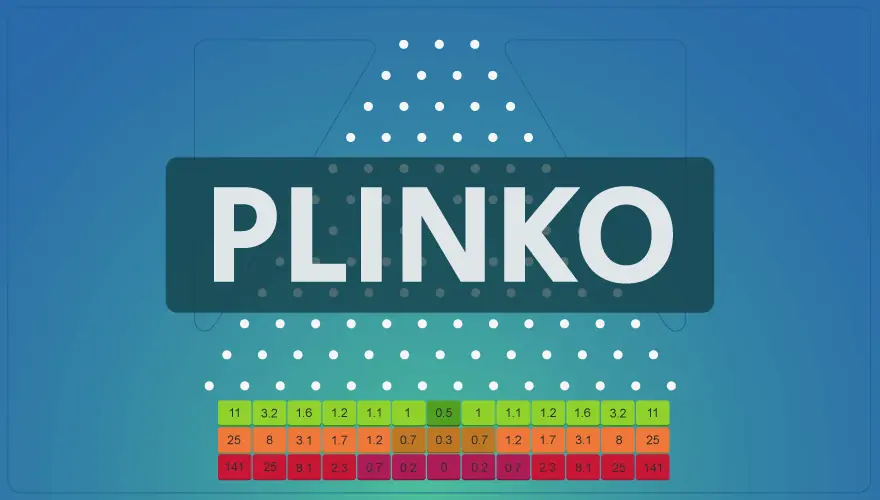
Plinko is a chance-based casino game built around a vertical board filled with pegs. A ball drops from the top, bounces left and right as it hits the pins, and eventually lands in one of several payout slots at the bottom. Each slot carries a multiplier. Most of the central slots usually offer smaller returns, while the outer edges often hold the highest multipliers and the lowest probability of being hit.
On paper, that sounds almost too simple to sustain interest. In reality, the format works because it creates visible suspense from a very small action. The player does not just receive an instant result; they watch randomness take shape. Every bounce suggests a possibility. Every late change in direction creates a tiny surge of hope or frustration. That visual transparency is one of Plinko’s biggest strengths. Even when the result is random, the path feels tangible.
At Katsubet casino, this matters because Plinko appeals to players who want something more immediate than a slot but less procedural than best blackjack page at Katsubet Casino or roulette. It sits in an unusual middle ground. The rules are simpler than most casino formats, yet the emotional curve of each round is strong. One of the most interesting things about Plinko is that it often feels calmer than a slot before the drop and more intense during the few seconds that follow.
Another reason the game became so visible is that it translates well to streaming and short-form content. A rare edge hit can look dramatic. A sequence of low returns can build tension quickly. Still, I would not judge the game by clips alone. Edited highlights hide the main truth: most sessions are defined not by spectacular multipliers, but by the repeated interaction between stake size, chosen risk level, and a distribution curve that tends to reward patience less often than players assume.
How the core Plinko mechanic actually works
The basic structure of Plinko is easy to describe, but the practical meaning sits in the details. You usually start by choosing three things: your bet size, the number of rows on the board, and the risk setting. Some versions may simplify the options, but these are the levers that shape the session.
Once the ball is released, it collides with a series of pins. At each contact point, it moves left or right. The final landing position determines the payout multiplier. The mathematics behind the board are tied to distribution: central outcomes are more common because there are more paths leading toward the middle, while extreme edge outcomes are rarer because far fewer paths reach them.
This is the part many new players underestimate. The game does not work like a free-form cascade where every slot is equally likely. It is closer to a probability funnel. The board creates a natural tendency toward the centre. High multipliers are not just “hard to get” in a vague sense; they sit at the end of statistically narrower routes.
| Element | What it changes | What it means in practice |
|---|---|---|
| Bet size | Value of every drop | Controls session cost and emotional pressure per round |
| Rows | Board depth and multiplier spread | More rows usually mean a wider payout range and stronger variance |
| Risk level | Distribution of multipliers | Higher risk often lowers the frequency of decent returns while increasing top-end potential |
| Auto-play or rapid drops | Session tempo | Can accelerate bankroll swings faster than many players expect |
Risk setting is especially important in Katsubet casino Plinko. A low-risk board generally compresses the payout map. That means fewer dramatic highs, but also a smoother stream of modest results. A high-risk board stretches the distribution. Small or losing outcomes become more common, while the top multipliers become much more attractive but much less accessible. The game can look almost identical on screen while behaving very differently underneath.
That contrast is one of the defining features of Plinko. The interface stays simple, but the session profile changes sharply with one setting. This is where many players make a mistake: they treat risk level as a minor preference, when in fact it determines the entire personality of the round sequence.
Why the session rhythm feels so different from other casino formats
Plinko has a very specific tempo. Each round is short, but not instant. You place a stake, release the ball, and watch a result arrive over a few seconds. That delay is crucial. It gives the game a visual arc without slowing it into the drawn-out pace of some slots or live tables.
In practice, this creates a rhythm that many players find unusually sticky. The game is fast enough to encourage repeated drops, yet each result has just enough suspense to feel eventful. This mix can be more absorbing than it first appears. I often describe Plinko as a game of “micro-dramas”: every round is tiny, but the emotional feedback is immediate and clear.
There is also a psychological detail worth noting. In slots, players often focus on symbols, bonus triggers, and the possibility of a feature round. In Plinko, all attention narrows to movement and landing position. That concentration can make each outcome feel more personal, even though the result is still random. When the ball drifts toward a high multiplier and turns away at the last bounce, the disappointment feels sharper because the path was visible.
This is one of the most memorable observations about Plinko: the game makes randomness feel almost negotiable for a second, even though it is not. That illusion of “almost” is powerful. It keeps players engaged, but it can also encourage over-reading short sequences.
If you use fast repeat bets or auto-play, the rhythm changes again. The visual suspense remains, but bankroll movement speeds up. What felt controlled over ten manual drops can become surprisingly volatile over one hundred automated rounds. That is why the pace setting matters as much as the stake itself.
Understanding probabilities, risk levels, and realistic expectations
Before launching Plinko at Katsubet casino, a player should understand one central point: this is not a game where frequent small action guarantees a stable long session. The board may produce many middling or low-end outcomes, but the payout structure is still designed around a house edge and an uneven return pattern.
The most common misunderstanding comes from the visual nature of the board. Because you can see the ball bouncing and because central slots appear reachable so often, some players assume the game is gentler than it really is. In truth, the experience depends heavily on the selected configuration. A low-risk setting may feel manageable for longer stretches, but a high-risk setup can produce long sequences of weak returns while still technically functioning exactly as intended.
Here is the practical way I would frame it:
- Low risk usually suits players who want more frequent modest feedback and less violent bankroll movement.
- Medium risk tends to create a balance between playable pacing and occasional stronger spikes.
- High risk is for players who knowingly accept dry stretches in exchange for a shot at much larger multipliers.
That does not mean low risk is safe or high risk is automatically better value. It means the shape of the session changes. On high risk, losing momentum can build quickly because many drops may return little or nothing meaningful relative to the stake. On low risk, the game can feel steadier, but also less exciting if you are chasing standout hits.
A second important point is that short-term results tell you very little. Plinko is especially good at producing misleading streak narratives. A player may see several centre-heavy landings and believe the board is “cold” on edges, or hit one large multiplier early and think the setup is generous. Neither conclusion has much analytical value. The visible path of the ball invites pattern hunting, but the game does not reward that habit.
My advice is simple: treat every drop as an independent event shaped by the selected board parameters, not by the emotional memory of the previous five rounds.
Who Plinko suits and where caution is necessary
Not every casino player will enjoy Plinko for the same reasons, and some will not enjoy it at all. That is not a flaw. It is a consequence of how focused the format is.
Plinko usually works best for players who appreciate direct mechanics, short rounds, and clear cause-and-effect between settings and session behaviour. If you like adjusting risk, observing how a simple system changes under different parameters, and playing in compact bursts, there is a good chance this format will make sense to you.
It may be less suitable if you prefer layered gameplay, bonus progression, narrative themes, or strategic input. There is no deck management here, no feature build-up, and no complex decision tree once the drop begins. If your enjoyment depends on evolving rounds or a sense of tactical control, Plinko can start to feel narrow after the novelty fades.
I would be especially cautious with this game if you are the kind of player who reacts strongly to near-misses. Plinko produces a lot of visually persuasive almost-moments. The ball can seem one bounce away from a major multiplier. That can be exciting, but it can also tempt players to increase stakes for emotional rather than rational reasons.
| Player type | How Plinko may feel | Likely fit |
|---|---|---|
| Fast-session player | Clean, immediate, easy to repeat | Strong fit |
| Bonus-hunting slot fan | Too minimal, less layered | Mixed fit |
| Strategy-oriented table player | Too little decision-making once the round starts | Weak fit |
| High-variance seeker | Appealing on aggressive settings | Strong fit with caution |
One more observation that separates Plinko from many other formats: it can feel harmless because it looks almost toy-like, while delivering a session profile that is anything but harmless on the wrong settings. That contrast is easy to miss, especially for newer players.
What Plinko reveals about session tempo, bankroll pressure, and outcome spread
From a practical standpoint, Plinko is a game of distribution rather than progression. You are not building toward a bonus round. You are not waiting for a table situation to improve. You are exposing your bankroll to repeated, compact probability events.
That has two direct consequences. First, bankroll pressure depends not only on your stake, but on how quickly you repeat drops. Second, the emotional shape of the session is tied less to one giant moment and more to how clusters of results accumulate.
For example, ten low-return drops in a row may not look dramatic individually. Together, they can create a meaningful drain. On the other hand, one strong multiplier can reset the mood of the entire session. This makes Plinko feel swingy even when the interface stays calm.
At Katsu bet casino, this is exactly why I would recommend setting limits before you start rather than during the session. The game’s clean design reduces friction. That is good for usability, but it also means rounds can stack up quickly with very little pause for reflection.
If you want a more controlled experience, I would focus on three practical habits:
- Use a stake size that remains comfortable over a sequence of weak outcomes, not just a few isolated drops.
- Choose risk based on session goals, not on frustration after missing a high multiplier.
- Be careful with auto-play unless you already know how the selected setup behaves over time.
These points sound basic, but in Plinko they matter more than in many other titles because the game removes distractions. What remains is pure repetition, and repetition amplifies both discipline and mistakes.
How Plinko differs from classic slots and other casino games
The easiest way to understand Plinko is to compare it with what it is not. It is not a slot in the traditional sense. There are no reels, no symbol combinations, no expanding feature ladder, and no bonus round that transforms the session structure. The result arrives from a physical-looking path rather than a symbol-based display.
Compared with slots, Plinko offers more visible transparency but less thematic depth. You can see the ball travel and understand why the landing zone matters. At the same time, you lose the variety that comes from reel modifiers, free spins, wild systems, and changing bonus states. For some players, that is refreshing. For others, it feels too bare.
Compared with roulette, Plinko shares a simple bet-result loop, but it adds visual progression between stake and outcome. Compared with real money crash games, it is less about timing a decision and more about accepting a predefined probability field. Compared with blackjack, it removes strategic choice almost entirely once the round begins.
Here is the practical distinction that matters most: Plinko is driven by configuration rather than in-round decisions. You shape the session before the drop, not during it. If you enjoy setting parameters and then observing how the system behaves, that can be appealing. If you want live agency inside the round, other formats may suit you better.
Practical strengths and limitations of Katsubet casino Plinko
Looking specifically at the appeal of Katsubet casino Plinko, I see a game with clear strengths, but also with boundaries that should be acknowledged honestly.
Main strengths:
- Immediate clarity. The rules are easy to grasp, which lowers the barrier to entry.
- Strong visual suspense. The bouncing path creates tension without needing complex design.
- Flexible session style. Risk levels and board settings can change the feel of play substantially.
- Fast rounds. Good for players who want short, concentrated sessions.
- Transparent structure. It is usually easier to understand where the multipliers sit and why edge outcomes matter.
Main limitations:
- Limited depth. The format can become repetitive if you need evolving features.
- Easy to misread emotionally. Near-misses can distort judgment.
- High-risk settings can be punishing. Large multipliers are attractive, but weak sequences may be longer than expected.
- Fast pace can hide bankroll drain. Especially with repeated or automated drops.
- Little strategic control. Once the ball falls, the player is mostly an observer.
The most important takeaway is that the game’s strengths and weaknesses come from the same source: simplicity. The stripped-down structure makes Plinko accessible, readable, and tense. It also means there is less variety to cushion repetition and fewer decision points to slow impulsive play.
What to check before launching a Plinko session
Before starting a session at Katsubet casino, I would pay attention to a few practical details that directly affect the experience.
First, check whether the version offers different row counts and risk modes. These are not cosmetic options. They define how broad the multiplier map is and how sharply outcomes can swing. If you skip this step, you are effectively entering the game without understanding its behaviour.
Second, look at the payout layout before placing repeated bets. Where are the highest multipliers positioned? How compressed are the central values? A board with a dramatic edge spread should be treated very differently from one with a flatter structure.
Third, if a demo mode is available, use it briefly. Not because demo results predict real-money outcomes, but because it helps you understand the rhythm. Plinko is one of those formats where the feel of the session matters almost as much as the math. A player can understand the rules in thirty seconds and still misjudge the pace over twenty minutes.
Finally, decide what kind of session you want. Are you testing the format casually? Looking for high-voltage multiplier hunting? Trying to stretch a bankroll across many drops? Plinko responds very differently to each goal. The same board can feel controlled to one player and frustrating to another simply because they came in with the wrong expectation.
Final verdict
Katsubet casino Plinko offers a very specific kind of casino experience: simple to enter, quick to process, visually transparent, and capable of producing real tension from a single falling ball. That is its core promise. It does not try to compete with slots on theme depth or with table games on strategy. Instead, it turns probability into something you can watch unfold.
Its biggest strengths are clarity, pace, and the way risk settings reshape the session. A player who likes compact rounds, visible randomness, and adjustable intensity can get real value from this format. The game is especially effective for those who want direct action without learning a complicated system.
The caution point is just as clear. Plinko can look lightweight while delivering sharp bankroll swings, especially on aggressive settings or during fast repeat play. Near-miss psychology is part of the experience, and players who chase those moments can lose perspective quickly. That is why understanding the board, the risk level, and your own session goal matters before the first drop.
If you want a casino format that is easy to read but not necessarily easy to manage emotionally, Plinko is worth trying. If you prefer layered features, slower development, or meaningful strategic input, another type of game will probably suit you better. In the end, Plinko is not compelling because it is trendy. It is compelling because it takes a very simple structure and turns it into a concentrated test of patience, expectation, and risk tolerance. Those comparing loyalty perks can weigh this section against real money game selection inside Katsubet Casino.
FAQ
What is the goal of Plinko inside the online casino?
The goal is to place a ball release point and watch it bounce down the board until it lands in a scoring slot. Each landing slot is tied to a multiplier that affects the result shown for that round.
How does the ball drop work in Plinko, and why do multipliers differ?
The ball travels through pegs and falls into one of the outcome slots at the bottom. Different slots correspond to different multipliers, so the same starting action can still lead to different results.
Is Plinko played in demo mode or real-money play?
Both options may appear in the Plinko lobby. Demo mode is for practice, while real-money play is tied to the balance in the player account.
How do table limits in Plinko affect the minimum and maximum round stake?
Each Plinko game can show its own minimum and maximum stake limits. These limits apply to real-money play and may restrict what can be entered before launching the next ball drop.
What payment settings should be reviewed if real-money play is selected for Plinko?
Real-money rounds require a sufficient account balance. If the balance is low, deposit through the cashier section before launching Plinko, and keep an eye on any active withdrawal or verification steps.
If a bonus offer is active on the account, does it change how Plinko rounds work?
Any bonus terms that apply to gameplay can affect how winnings are credited and what wagering requirements must be met. Review the bonus rules in the account promo area before playing Plinko with real money.
In case the current Plinko access is unavailable, how does a working mirror help?
A working mirror can restore access to the game lobby when the current connection fails. Use the mirror only when the main session does not load, and ensure the URL is accessed through the official site entry points for the best account safety.
Is Plinko suitable to play responsibly on a short session?
Plinko works well for quick rounds because each ball drop resolves immediately into a slot multiplier. Setting a session limit and stepping away after reaching it supports more responsible play, especially when multiplier outcomes start moving quickly.